
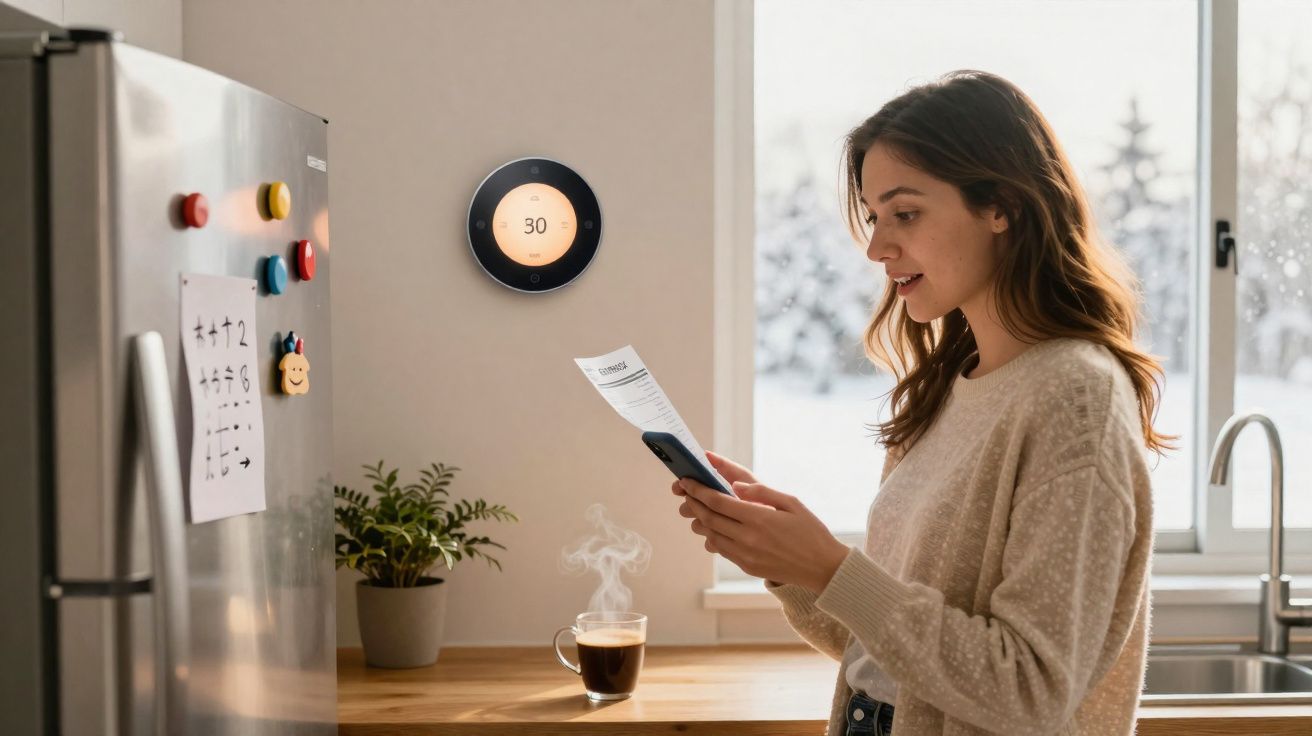
The kettle let out a tentative whistle as I stared at the latest bill, and the radiator made that thin metallic ticking it always does just before it properly warms through. On the wall sat a three-year-old programmable thermostat that, in practice, was little more than decoration: I programmed it once, then stopped paying attention. The result was predictable - the house stayed toasty for ages after we’d left, then felt cold exactly when we actually wanted heat. That morning I ordered a smart thermostat not because I’m keen on gadgets, but because my breath was misting in the kitchen while it felt as though my money was drifting straight into the loft. I wasn’t expecting comfort to change, and I certainly didn’t expect it to pay for itself so quickly. The surprise arrived almost immediately.
The quiet leak in your heating routine
If you plotted your heating on a simple line chart, you’d see that most UK homes run on habit rather than need: a sharp burst from 06:30 to 09:00, then an evening block that drifts towards bedtime because nobody wants to start pressing buttons while brushing their teeth. We rush out at 08:10 and the boiler keeps quietly working long after the last coat has hit the hallway. On other days we get back late and, for hours, the radiators have been warming empty cushions.
It isn’t deliberate waste. It’s just how life behaves: trains run late, kids’ clubs overrun, and a “quick pint” becomes two.
Most people recognise the sinking feeling half-way to work: you suddenly remember the heating is still on. In your mind the living room turns into a greenhouse, the cat sprawls like royalty, and the gas meter spins like a roulette wheel. Stack those little slip-ups across a whole winter and you don’t get a burst pipe - you get a steady drip. It’s easy to ignore until the bill shows you the puddle.
Most homes don’t need more heat; they need smarter timing. A smart thermostat’s entire purpose is to stop that drip without asking you to live like a monk with a stopwatch. It observes, learns, and shaves away the waste around the edges that we never quite get round to dealing with ourselves.
The thermostat that learns your life saves kilowatts you never see
A modern smart thermostat brings three abilities a clunky wall box simply can’t match.
First, it adapts start times. On frosty mornings it begins a touch earlier; on milder days it waits - because it learns how quickly your house actually warms up.
Second, it reacts to whether anyone is home. It stops heating when you’ve genuinely gone out, rather than sticking rigidly to a schedule that only guesses you might be away.
Third, it encourages steadier boiler behaviour. Instead of a wasteful on–off seesaw that overshoots and then cools down again, it can coax the system to run more smoothly - less “blast then coast”, more controlled background heat.
On the first day in my house, it suggested dropping the setpoint from 20°C to 19°C and asked whether that was acceptable. One degree sounds trivial, but it can cut a meaningful slice of gas use - and nobody noticed, apart from the cat, who simply inched a little closer to the radiator.
Then came geofencing. Leave the street and the heat gently eases back; turn onto it again and the boiler wakes up. It was as if the house stopped trying to behave like a sauna when nobody was in it and started acting as though it could count footsteps.
The 6‑month maths, not the brochure
In the UK, the numbers aren’t spread neatly across a year. In a typical semi with gas central heating, the bulk of energy use lands in the six colder months - it’s heavily weighted, not evenly shared.
So if your gas spend for space heating last winter was roughly £700–£1,000, and a smart thermostat trims 15–25% of that waste, you’re looking at about £105–£250 saved across that same cold stretch. When many smart thermostats are picked up in offers around £99–£149, the direction of travel is obvious.
Here’s what it looked like in my own case, using the smart meter plus the thermostat’s runtime logs. Average weekday runtime fell from 6.5 hours to 5.1 hours. The morning peak shortened by 35 minutes because the hallway warmed faster than I’d assumed, and the evening session shifted later by 20 minutes so we weren’t burning gas at 17:00 for a 18:30 arrival. Across 90 winter days, the meter showed roughly 1,300 kWh less gas than the same period the year before. At roughly the unit rates we’re dealing with, that’s a three‑figure saving before the clocks go forward.
Friends in a mid‑terrace two streets away saw a similar outcome, but their biggest gain came from occupancy detection. Their workdays are unpredictable, so the heating used to run “just in case” for guests who never showed up. With phones acting like key fobs, the boiler slept when the house was empty and softened the heat as they approached. They saved around £35–£40 per month through the core winter months, and they grabbed their smart thermostat in a Black Friday deal for £129. That isn’t marketing fluff - that’s payback before the daffodils are out.
The small behaviours you don’t have to remember
People often assume saving energy means becoming a constant fiddler: nudging radiator valves every time you leave a room, rewriting schedules whenever a meeting shifts, cracking a window for a quick blast of air and remembering to turn the heating off first. In reality, almost nobody sustains that level of daily choreography. Life is too untidy, and any plan that requires you to behave like a robot usually collapses by the second week.
This is where a smart thermostat earns its keep: it turns sensible intentions into defaults.
Window detection can reduce heat when the kitchen door is left ajar and January air slips in like a cheeky thief. Weather lookahead stops the boiler sprinting when a jog would do. If the house has already warmed nicely by 08:15, it doesn’t keep charging just to hit a number on the screen. The savings arrive in millimetres rather than miles - but those millimetres add up across a whole winter.
There’s also something quietly humane about “forgiving” technology. Forget to turn the heating down and it tidies up after you. Come home early and it gently overrides the schedule. Those small kindnesses stop waste becoming a habit and turn efficiency into the background setting.
Six months is a winter, not a lifetime
When people hear the word “payback”, they often think in years - a solar-panel mindset. Heating works differently because the spending curve is lopsided: most of what you pay bunches between October and March, which means most of what you save sits there too.
You don’t need multiple summers for the numbers to work. You need one UK winter with a thermostat that isn’t asleep at the wheel.
Six months is exactly how long the UK asks the boiler to work its hardest. During that period, the thermostat is effectively making decisions for you every few minutes: tiny, dull, relentless decisions. That’s where the money lives - not in one clever trick, but in hundreds of small ones.
Quick sums you can run on your fridge door
Pull out last winter’s gas spend (or open the smart meter app you half-ignore). Take a steady, sensible 15% off the months where the heating was actually on - that’s the conservative range for a home that previously ran a set-and-forget schedule. Then compare it to the cost of a decent smart thermostat when it’s discounted (which is when many people buy).
If that 15% chunk is larger than the purchase price, you’ve done the maths without touching a spreadsheet.
If your thermostat costs less than your winter waste, the maths is already done. Some households beat 15% easily - especially where the heating used to run for hours with nobody at home. Others land closer to that baseline and still see the savings sing. Either way, it’s months - not “someday”.
Where the payback gets even faster for smart thermostat households
Ask any parent of teenagers about doors left open and you’ll get an instant case for automation. Homes with irregular routines - shift workers, pets with sitters, kids moving between households - often gain more because their waste is accidental, not intentional. A smart thermostat doesn’t prevent the chaos; it prevents the energy bleeding out when the chaos happens. A delayed train used to mean a warm hallway greeting nobody. Now it means the hallway warms up when your key actually turns.
If you want to take it further later on, smart radiator valves can tackle the classic problem of heating rooms you barely use. That puts you into multi‑zone control and can stack additional savings - but the core payback story doesn’t depend on it. Even without valves, a smart thermostat that manages start times, setback temperatures and occupancy can strip a surprising amount of fluff out of your bill. Think of smart radiator valves as an encore, not the main act.
There’s also efficiency hidden in how these thermostats run the boiler. By avoiding big overshoots and long, wasteful cycles, they can keep return water cooler and the whole system running more happily. You experience that as steadiness: less roasting then shivering, more consistent warmth with less gas.
A day with a smart thermostat feels different
Imagine a late-January weekday. The air outside has that thin, tinny cold that stings your ears. You step out, the door clicks shut, your phone gives a single buzz, and the heating sighs to a stop behind you. The house doesn’t “go cold” with a dramatic sulk - it simply rests.
You walk to the station with a coffee warming your hands, and you don’t replay the bill in your head because the boiler isn’t performing for an empty room.
On the way home, the system wakes as you turn onto your street. The hallway feels warm when you hang up a damp scarf. The radiator ticks softly - the sound it makes when it’s working steadily rather than thrashing. The best savings are the ones you don’t notice until the bill arrives. A good smart thermostat gives exactly that: less guilt, more ease.
Before you tap buy: smart thermostat compatibility, privacy and setup
Compatibility checks are dull - and worth the five minutes. Most UK combi and system boilers work well with the major smart thermostat brands, and your energy supplier may offer a discount that makes the payback even clearer. Prioritise geofencing, weather adjustment, and an app that shows daily runtime so you can watch the changes over time. If wiring makes you uneasy, most manufacturers offer professional installation that’s typically finished in under an hour with minimal disruption.
It’s also sensible to think about what you’re comfortable sharing. Many smart thermostats use cloud services to enable remote control and features like weather lookahead. Spend a moment in the settings: review data permissions, turn on two‑factor authentication if it’s offered, and make sure you’re happy with who can access your heating controls. Convenience is the point - but it shouldn’t come at the cost of peace of mind.
Once it’s on the wall, give it one job
Let the thermostat focus on a single mission: cutting waste without denting comfort.
Start with a 19°C setpoint and allow it time to learn how your walls and radiators behave. Trim your heating windows by 20–30 minutes and see whether anybody even comments. Chances are they won’t - except, eventually, the meter. Your home should feel warmer at the right moments and invisible the rest of the time.
There’s a quiet satisfaction in the first few weeks of checking the usage graph and watching the evening block shrink like the tide going out. It isn’t smugness; it’s relief. You’re paying for warmth you actually feel, rather than heating the gaps in a life that moves around.
Smart thermostats don’t change your winter; they change the waste in it. These days, the upfront cost can be roughly the price of a couple of decent dinners out - often less with a seasonal deal - and the return arrives in the same season you buy. Once you see that, it stops feeling like a gamble and starts feeling like giving your home the brain it should have had all along.






Comments
No comments yet. Be the first to comment!
Leave a Comment