
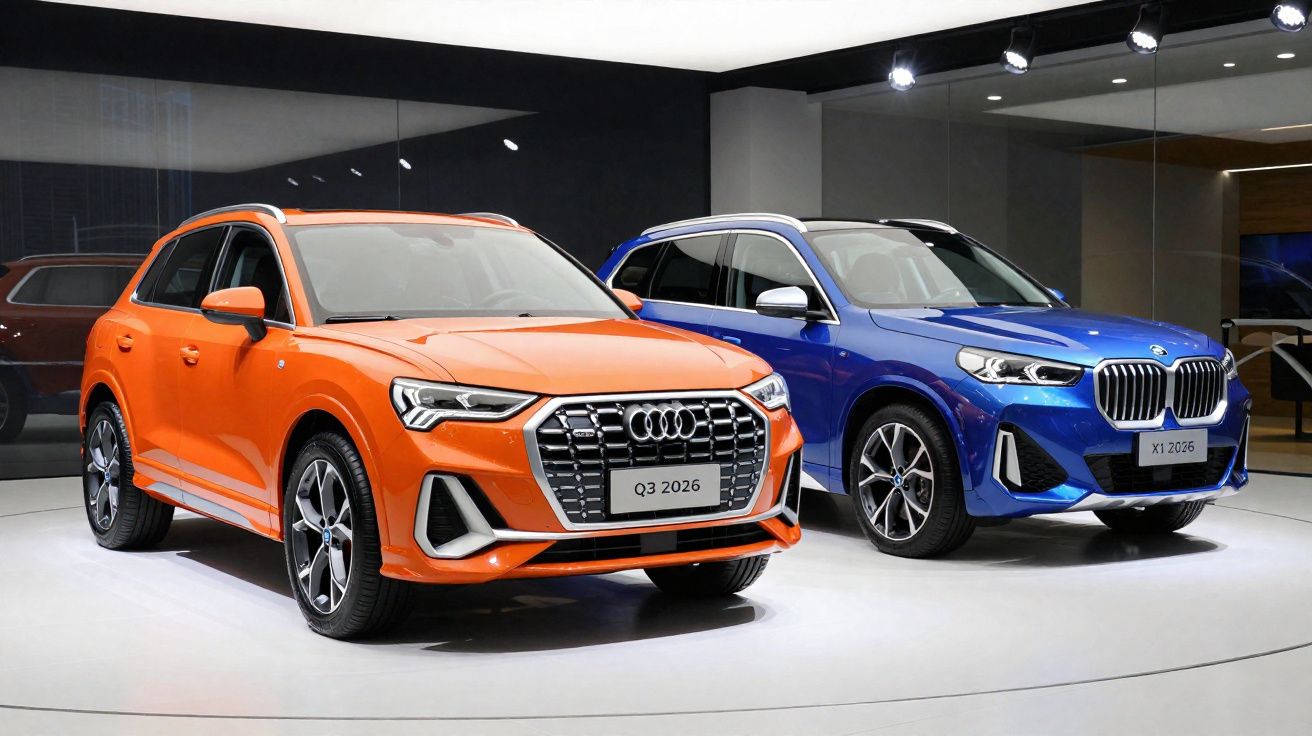
£50,000 can sound like no-compromise luxury - yet in the real world, every centimetre of space, every tick-box option and every litre of fuel still matters.
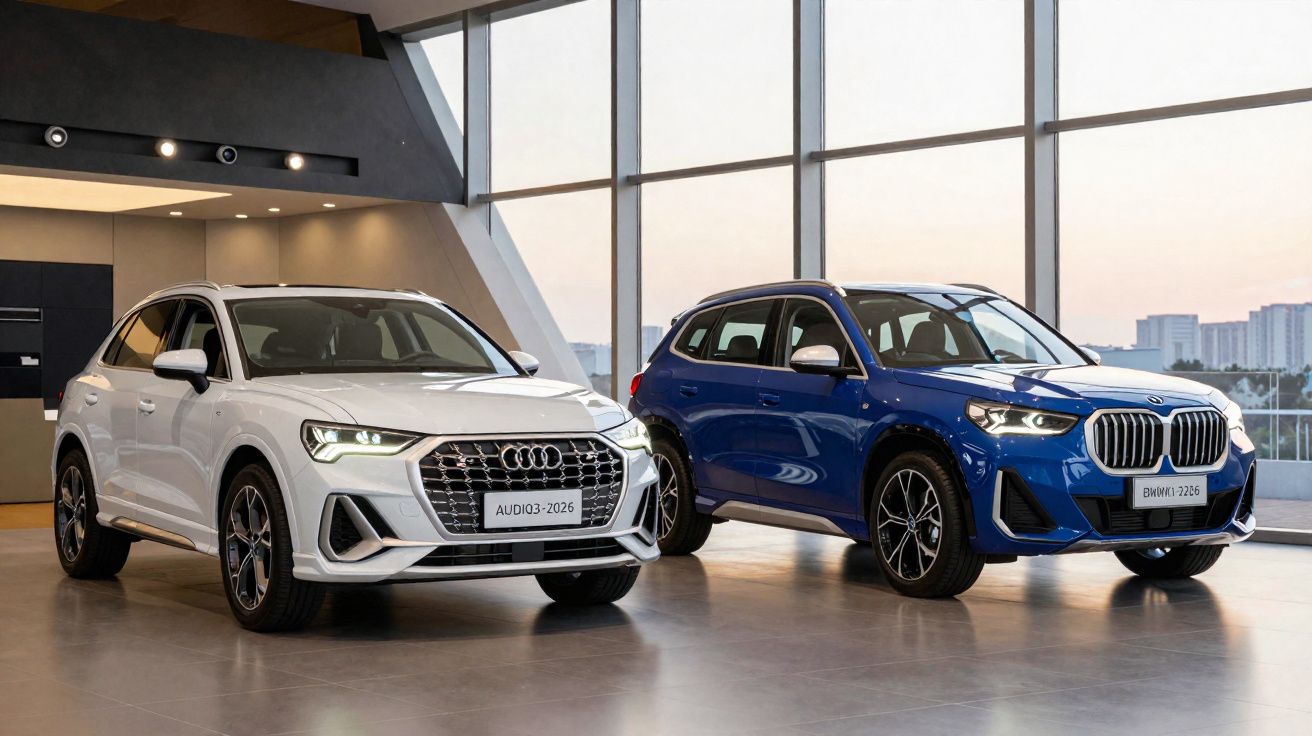
For 2026, many buyers face a genuinely awkward decision: Audi Q3 with the 150 PS petrol or BMW X1 with the 170 PS three-cylinder? They target the same audience, both hover around the €50,000 mark, and still they pursue noticeably different approaches once you look beyond the brochure.
Around €50,000: how closely matched Audi Q3 and BMW X1 pricing really is
In third-generation form, the Audi Q3 kicks off with the 150 PS TFSI plus mild hybrid assistance at €43,850 in base Design trim. In test guise Audi pushes it into the sportier S Line, and the figure effectively lands at about €50,000 - before you add any extras.
BMW positions the X1 sDrive20i with its 170 PS three-cylinder higher from the outset: €50,900 in M Sport trim. On paper that makes the X1 dearer than a comparable Q3, but the standard kit quickly makes it feel the more “premium for the money” proposition.
In day-to-day terms, it’s less about list price and more about how Audi and BMW structure equipment and optional extras.
That contrast becomes obvious with the test cars. The Q3 remains relatively restrained with just €3,100 of options - paint, larger wheels, a black styling pack and tinted rear glass accounted for most of it.
The BMW X1, by comparison, turns configuration into a sport: €14,750 in extras including electric seats, a panoramic roof and a heated steering wheel. That pushes the X1 to roughly €65,000, but it also means the cabin genuinely comes across as “one class up”.
Cabin quality and daily use: where “premium” is actually felt in the Audi Q3 and BMW X1
Materials and ambience in Audi Q3 vs BMW X1: which feels more expensive?
Inside the Audi Q3, the presentation is sturdy and neatly assembled, yet it leans towards the functional rather than the indulgent. The S Line test car relies largely on cloth upholstery: perfectly acceptable in quality, but not especially special to look at. Plain-looking trim strips reinforce that matter-of-fact vibe.
The BMW X1 in M Sport leans harder into visual drama: Alcantara seats with blue stitching, matching interior inlays and a sportier steering wheel. Crucially, many of these touches are part of the M Sport package as standard rather than expensive add-ons.
Even before the options list gets silly, the X1 can feel like it belongs in a pricier bracket - the Q3 comes across as correct rather than covetable.
Controls and infotainment: screen size versus usability
With the central touchscreen, Audi has the clearer win. The system responds more quickly, the layout is more intuitive, and it’s less of a maze. Core settings such as drive modes, assistance systems and navigation are easier to locate and adjust without hunting.
BMW’s display looks modern and impressively large, but living with it can be needlessly complicated. The menu structure feels busy, and some features sit buried several layers down. One particularly odd detail: the “Personal” drive mode isn’t as customisable as you’d expect, while “Sport” offers more granular adjustment (for example, steering weight or stability control behaviour).
Space and practicality: rear-seat room versus boot capacity
Both SUVs offer a sliding rear bench, letting you trade legroom for load space as needed. With the bench pushed fully back, the BMW X1 edges ahead for rear knee room - a genuine benefit for taller passengers on longer journeys.
The boot story flips the other way:
- Audi Q3: 550 litres
- BMW X1: 466 litres
If you regularly carry a pram, a dog crate or bulky holiday luggage, the difference is not subtle. The Q3 simply swallows more before you need to start folding seats.
In everyday use, the X1 feels like the more upmarket lounge, while the Q3 behaves like the more useful storage space out back.
Even with the Q3’s advantage for luggage, the overall “living on board” impression still tilts towards BMW. The X1 feels more elevated throughout and delivers stronger premium atmosphere even without an all-out options spree.
Engine and driving feel: three cylinders in the BMW X1 vs four cylinders in the Audi Q3
Performance and character
On paper, the BMW X1 looks disadvantaged: a 1.5-litre three-cylinder versus the Audi Q3’s 2.0-litre four-cylinder. In many minds, “four cylinders” still automatically means smoother refinement.
From cold, the BMW briefly sounds like a typical three-pot, with a slightly rough-edged note. Within seconds that fades. In normal driving the X1 actually comes across as better insulated and generally quieter than the Q3.
Lean harder on the accelerator and the three-cylinder becomes audible again - yet it also feels keener to rev and noticeably more energetic. The Audi unit delivers its power in a more even, linear way, almost relaxed to a fault.
Key figures: Audi Q3 TFSI 150 vs BMW X1 sDrive20i
| Model | Power | Cylinders | Character |
|---|---|---|---|
| Audi Q3 TFSI 150 | 150 PS | 4 | very linear, unobtrusive |
| BMW X1 sDrive20i | 170 PS | 3 | punchy, more eager to rev |
In measured performance, the BMW pulls clear: over 1 km from a standstill, the X1 is almost two seconds quicker than the Q3. It also delivers stronger in-gear response, which you feel immediately when overtaking on country roads or joining a motorway slip road.
Each time you ask for acceleration, the X1 feels more alert, more direct and more efficient - while the Q3 drives like a well-mannered cruiser.
Suspension, comfort and traction
Both test cars run on 19-inch wheels, and both do without adaptive dampers. Around town, Q3 and X1 feel similarly firm; sharp edges and potholes make themselves known.
As speeds rise, the gap opens. The BMW X1 smooths out imperfections more effectively, feels calmer on the motorway, and still maintains tidy body control. The Audi Q3 remains safe and predictable, but it’s less polished - you sense more of what’s happening beneath the tyres.
Tyres also play a part in grip. The X1 on Pirelli P Zero rubber delivered strong traction, particularly in the wet. The Q3 on Bridgestone Turanza tyres was more likely to relinquish traction on damp tarmac, especially when accelerating hard out of a bend.
One area where the Audi hits back is braking. From higher speeds the Q3 bites harder and gives a particularly reassuring pedal feel.
Budget, options and running costs
The risky configurator
With both models, the final bill can balloon. A striking example comes from a long-term Audi Q3: loaded with optional equipment, it reached €82,320, enabled by more than €20,000 in extras.
On the BMW X1, the options list appears to top out at around €15,000 - still substantial, but with a firmer ceiling. For both brands the same rule applies: features such as keyless access or push-button start, which some cheaper manufacturers include as standard, can still cost extra here.
If you tick boxes without a plan, Q3 and X1 can quickly land in price territory that used to buy a well-equipped executive saloon.
Consumption, CO₂ and range
On CO₂ emissions, the Audi sits above the BMW. In some markets that can translate into a higher purchase penalty or additional taxation. It’s not a night-and-day difference, but over time it nudges the cost curve slightly against the Q3.
Real-world fuel use also gives the X1 a small but consistent advantage - in town, on country roads and on the motorway. The Audi generally asks for a little more from the tank. Ironically, the BMW’s fuel tank is smaller, which limits range, although around 650 km between fill-ups is still achievable before you need to stop.
UK ownership reality check: insurance groups, servicing and residual values (added)
For UK buyers, the purchase price is only the start. These compact SUVs often sit in relatively high insurance groups, and large wheels or high-value option packs can push premiums further - particularly on PCP/lease deals where replacement parts costs matter. It’s worth getting insurance quotes using the exact trim (S Line or M Sport) and wheel size before committing.
Servicing and depreciation are also part of the real monthly cost. Historically, badge strength and trim popularity can have a noticeable impact on residual values in this segment, which in turn affects finance payments. If you’re buying on finance, compare not just APR but also guaranteed future value and mileage assumptions - a “cheaper” deal can become expensive if you routinely exceed the contracted distance.
Strengths and weaknesses at a glance
BMW X1 sDrive20i M Sport - where it shines
- Strong comfort level, especially at higher speeds
- High-quality cabin impression, particularly in M Sport
- Generous rear legroom
- Lively engine feel with clearly noticeable mild hybrid assistance
BMW X1 sDrive20i M Sport - where it irritates
- Complicated control logic with occasionally confusing menus
- Three-cylinder sound at cold start and under full throttle
- Digital instruments with a design that takes getting used to
Audi Q3 TFSI 150 S Line - key positives
- Excellent, smooth-to-use infotainment system
- Larger boot that’s genuinely useful day to day
- Strong, confidence-inspiring braking feel, especially from higher speeds
Audi Q3 TFSI 150 S Line - drawbacks
- Clearly weaker straight-line performance than the X1
- Instrument display feels relatively narrow
- Noticeable firmness at low speeds
Which SUV suits you best in 2026: Audi Q3 or BMW X1?
If your priorities are driving enjoyment, comfort and a more special cabin feel, the BMW X1 is the more complete blend. It’s the more energetic car to drive, feels more expensive inside, and tends to use slightly less fuel.
The Audi Q3 makes more sense for buyers who regularly carry lots of luggage, value a cleanly structured infotainment setup, and want especially reassuring braking. Its overall character is quieter and more reserved - even slightly conservative - which is precisely what some owners prefer.
Overall, the BMW X1 feels like the more coherent all-rounder for 2026, while the Audi Q3 wins via specific talents such as boot space and user-friendly controls.
How to avoid a wrong purchase decision
Configurators, brochures and YouTube reviews only get you so far. With cars like the Q3 and X1, a back-to-back drive on roads you know is hugely revealing: a rough urban section, a faster motorway stretch, and a twisty country road will quickly show how engine, suspension and noise levels work together.
It also helps to visualise your real usage. Is the car often loaded with two adults and holiday luggage? Or is there usually a teenager in the back with a sports bag? Honest answers make it clear whether the Q3’s larger boot or the X1’s roomier rear seats better fit your life.
Finally, be realistic about your tolerance for in-car tech. If nested menus annoy you, you’re likely to get on better with Audi’s approach. If you enjoy a more futuristic cockpit and don’t mind a longer learning curve, BMW’s system may suit you fine.
In 2026, these are two very mature compact SUVs. The BMW X1 holds the stronger hand for driving, comfort and perceived quality; the Audi Q3 counters with everyday usefulness and simpler operation. The X1’s “winner” status in a comparison test doesn’t make the Q3 a bad choice - it simply means you need to be crystal-clear about what matters most before you sign.


Comments
No comments yet. Be the first to comment!
Leave a Comment