
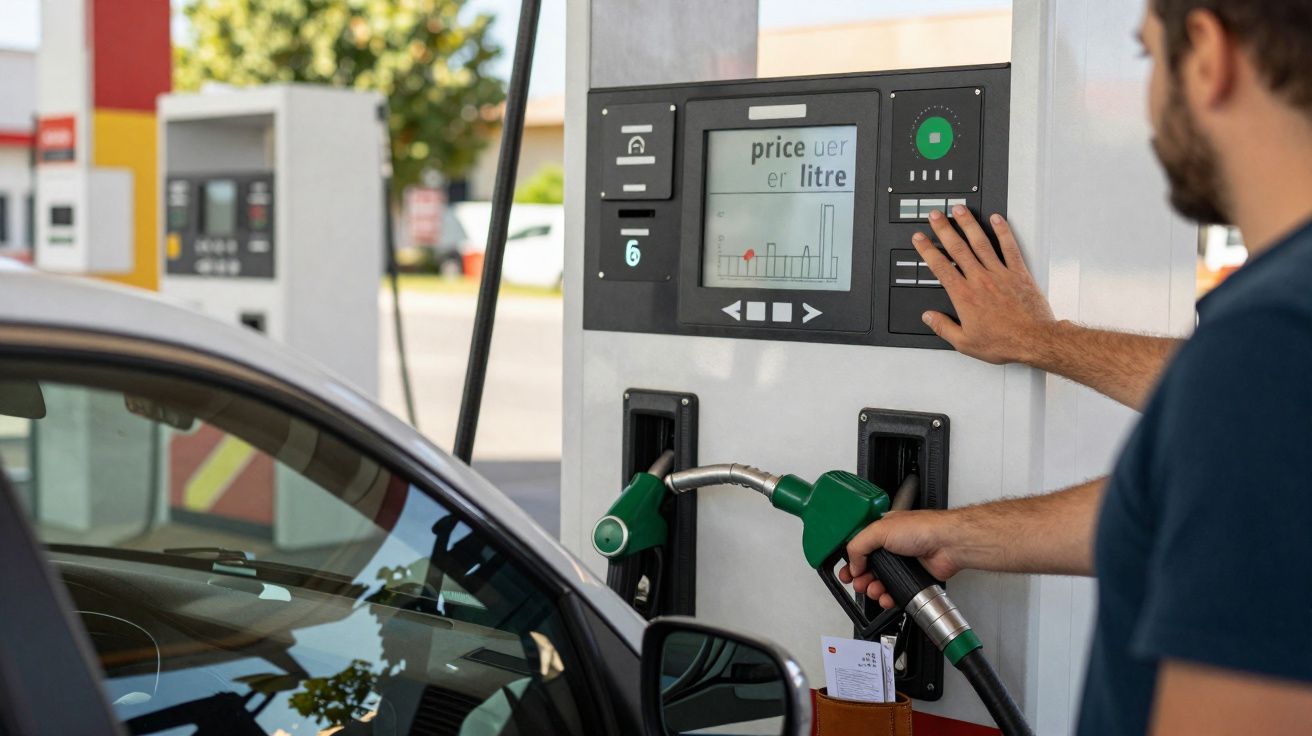
The driver ahead of you at the petrol pump lets out a long sigh, watches the numbers climb, then squints at the forecourt price board as though it might kindly drop by 20 pence. You can almost see the calculation in his pause: stop at €20? brim it? put in the bare minimum to reach payday? The display gives him litres and a total-nothing that tells him whether he’s getting a fair deal. No quick way to weigh it up against the station 3 kilometres down the road. Just that creeping sense of handing over control, one cent at a time.
From March 12, that familiar little moment is set to feel very different-and you’ll see why right on the pump.
From March 12, a new mandatory display appears on the petrol pump screen
From March 12, petrol stations won’t be able to rely on half the story at the point of payment. In addition to the litres dispensed and the amount due, the pump screen must show extra information: a clearly legible price per litre and the evolution of that price over a defined recent period.
In practical terms, that means you won’t have to guess whether today’s figure is broadly “normal” or whether it’s crept up sharply since you last filled up. A vague hunch becomes something concrete-something you can respond to immediately.
This requirement hasn’t materialised out of thin air. For years, public authorities and consumer groups have argued for stronger price transparency at the pump, especially after repeated surges in energy costs and the frustration that tends to follow. When prices spike, doubts multiply: are all service stations behaving reasonably, or are some quietly padding their margins under cover of global uncertainty?
The logic behind placing the information directly on the pump is straightforward: give motorists something usable in the moment, without needing to stand in the car park scrolling an app or a government site. You pay, you see, you compare. That’s the intent.
What you’ll notice in real life: price per litre, price evolution, and better decisions
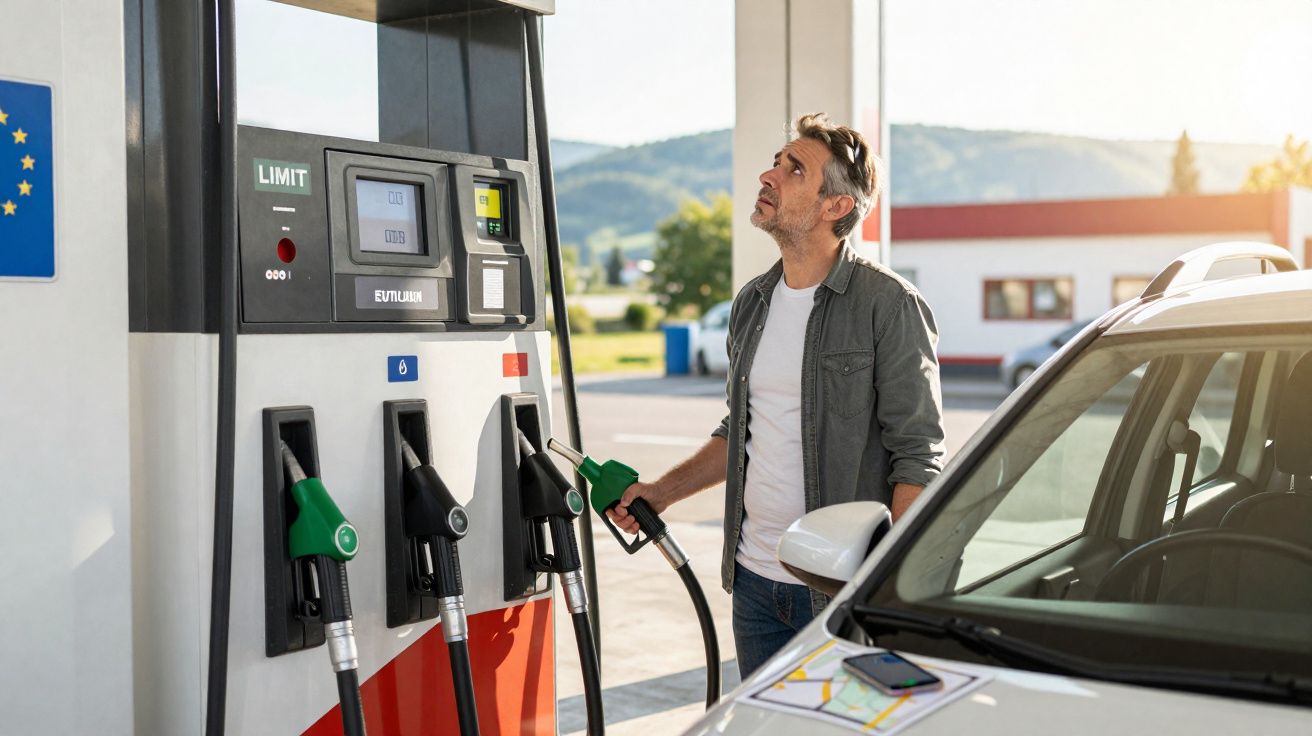
Imagine a hectic Monday evening on the ring road. You pull into a station you don’t usually use, purely because the warning light on the dashboard has started nagging. Until now, you’d likely have filled up, muttered under your breath, and driven away with that uneasy feeling you’d been overcharged.
With the new mandatory display, the decision point changes. As soon as you lift the nozzle, you can see not only today’s price per litre but also how that price sits against the recent trend. Perhaps you spot that diesel at this site is up by 6 cents since the start of the month-while you recall your local station rising by only 2 cents. All at once, stopping here no longer feels like a harmless convenience. Information changes the feeling in your stomach.
There’s another everyday scenario many people recognise: you get home, open a fuel-price app, and discover the station 800 metres from your front door was 10 cents cheaper. That stings-particularly if you’ve just spent €70 at a motorway services station.
Now you can do a quick reality check before you commit. For example: you normally pay €1.78 per litre for E10. On the way home you stop elsewhere and the pump shows €1.86, alongside an obvious indication that the price has jumped over the last few days. You immediately understand that this stop is costing you more than usual. Maybe you decide to add €15 and do the rest closer to home. It’s not about turning every fill-up into a spreadsheet exercise; it’s about getting a bit of control back.
Petrol pump display: how to use the price evolution to time your fill-ups
The most immediate benefit is bluntly practical: timing. If the figures show the price has leapt several cents versus the recent average, you can choose to buy only what you need to reach a cheaper area or your usual low-cost station. If, on the other hand, the display suggests the price is stable-or even slightly down-you might opt to fill the tank and avoid another stop later in the week.
In other words, you’re no longer operating blind. You’re being shown a small, simple trend-translated into numbers-right where your hand already is.
On a wider level, this transparency also nudges the balance of power between drivers and fuel distributors. When short-term price movements are visible at a glance, unusually steep or opportunistic increases become harder to disguise. That visibility can encourage more restrained adjustments and clearer pricing strategies over time.
And let’s be realistic: very few people check official price portals every day before setting off. What most of us rely on is what we can see in the couple of minutes between switching off the engine and hanging the nozzle back up. That’s exactly the vulnerable window this rule targets-the moment you’re tired, pressed for time, and tempted to think, “It is what it is; I don’t really have a choice.” From March 12, that resignation should be less automatic.
A small new habit, a real impact on your fuel budget
One simple habit makes this new mandatory display far more useful: pause for five seconds before you start pumping. Not a long comparison session-just long enough to read the price per litre and the recent evolution shown on the screen, then measure it against the last price you remember paying.
Those five seconds can be enough to choose your mode: full tank, half tank, or minimum survival. If the numbers look aggressively high, you can decide to buy only a couple of days’ worth and then refuel properly where prices are usually better. Over weeks and months, that tiny reflex can trim a few dozen euros from your annual fuel spend.
A helpful side-effect is psychological: seeing the “evolution” makes it easier to separate normal day-to-day movement from a sudden jump. Even if you don’t remember exact figures, you can still spot when a station’s pricing has shifted sharply compared with recent weeks.
It’s also worth remembering what this rule can’t do. This extra line on the pump won’t make motorists into fuel economists, and it won’t fix refinery disruptions, supply shocks, or geopolitical tensions. And on busy days you still won’t have perfect recall of what you paid last time.
The bigger danger is simply ignoring the information-treating it as another flashing set of digits while your mind is on dinner, the kids in the back, or the emails waiting. That’s normal. The aim isn’t perfection; it’s using the information when you have the headspace, and letting it go when you don’t-without beating yourself up. You’re not a machine; you’re just trying not to haemorrhage money one stop at a time.
One more practical point: different fuels can move differently. If you switch between E10, premium petrol, and diesel (or if you share a car and someone else fills it), the per-litre number only helps if you’re comparing like with like. A quick mental note of what you usually buy-and roughly what it costs-makes the new display far more effective.
Finally, if you regularly drive long distances, this change may be most valuable at the costliest stops: major routes and motorway services. The display won’t automatically make those places cheap, but it can help you decide whether to take a full fill there or just enough to reach a better-priced station off the main road.
“Energy prices are a sensitive subject because they hit people where it hurts: in their daily freedom to move around,” explains a consumer advocate who has been campaigning for this reform. “This new display is not a miracle solution, but it’s one more tool. What matters now is that drivers feel allowed to use it, to ask questions, to compare, to say ‘no’ when a price becomes absurd.”
- Take 5 seconds before pumping to read the price per litre and the recent trend.
- Compare it in your head with the last price you remember at your usual station.
- Adjust the amount you buy based on that quick check.
- Keep one or two “reference” stations in mind where prices are regularly lower.
- Remember: one expensive fill-up won’t ruin you, but repeating them quietly will.
A small line on the screen that says a lot about the times we’re in
This new mandatory information on petrol pumps might look insignificant: a few extra figures squeezed onto a small display between adverts for coffee and loyalty cards. Yet it reflects something bigger about the era we’re living through-where every euro seems to matter more each month, and trust in large institutions (energy firms, supermarkets, banks) feels increasingly fragile.
Some drivers will glance, register it, and carry on. Others will start taking photos, comparing, and messaging friends: “Look how much it’s jumped here this week.” This kind of everyday micro-transparency-repeated across millions of transactions-quietly shifts the relationship between brands and customers.
And in a few months, it may feel so normal you’ll forget it was ever missing, like wearing a seat belt or tapping to pay. But the day you pull into an unusually expensive station and decide-because the display makes it obvious-to put in €10 and go elsewhere, you’ll recognise it for what it is: a small, stubborn refusal to be a passive consumer. That’s often where real change begins.
| Key point | Detail | Value for the reader |
|---|---|---|
| New mandatory display | From March 12, pumps must show a clearer price per litre and the short-term evolution | Immediate sense of whether today’s price is high, low, or average |
| Quick comparison reflex | A 5-second pause to compare with your usual station or recent memory | More control over when and where you fill up, less wasted money |
| Pressure on stations | Visible price changes discourage extreme or opportunistic increases | Fairer pricing over time and stronger consumer power |
FAQ
What exactly changes at the pump from March 12?
Stations must add new mandatory information directly on the pump display, including a clearer price per litre and an indication of how that price has evolved over a recent period, so you can see at a glance whether you’re paying more than usual.Does this new rule apply to all petrol stations?
Yes. The measure covers all stations selling fuel to the public-motorway sites, supermarket forecourts, and independents-so drivers get the same baseline transparency wherever they stop.Will this change reduce fuel prices?
Not directly. However, making short-term movements more visible can deter abusive hikes and help you adjust your refuelling habits to avoid the most expensive stops.Do I need a specific app to benefit from this?
No. The whole purpose is that the information is visible on the pump itself, without needing your phone. Apps and comparison sites can still help, but they’re no longer your only tool in the moment.How can I use this information without obsessing over every cent?
Glance at it when you have the mental bandwidth, compare it with what you roughly remember paying last time, and adjust the amount you buy. Some days you’ll forget-and that’s fine. The goal is progress, not perfection.





Comments
No comments yet. Be the first to comment!
Leave a Comment