
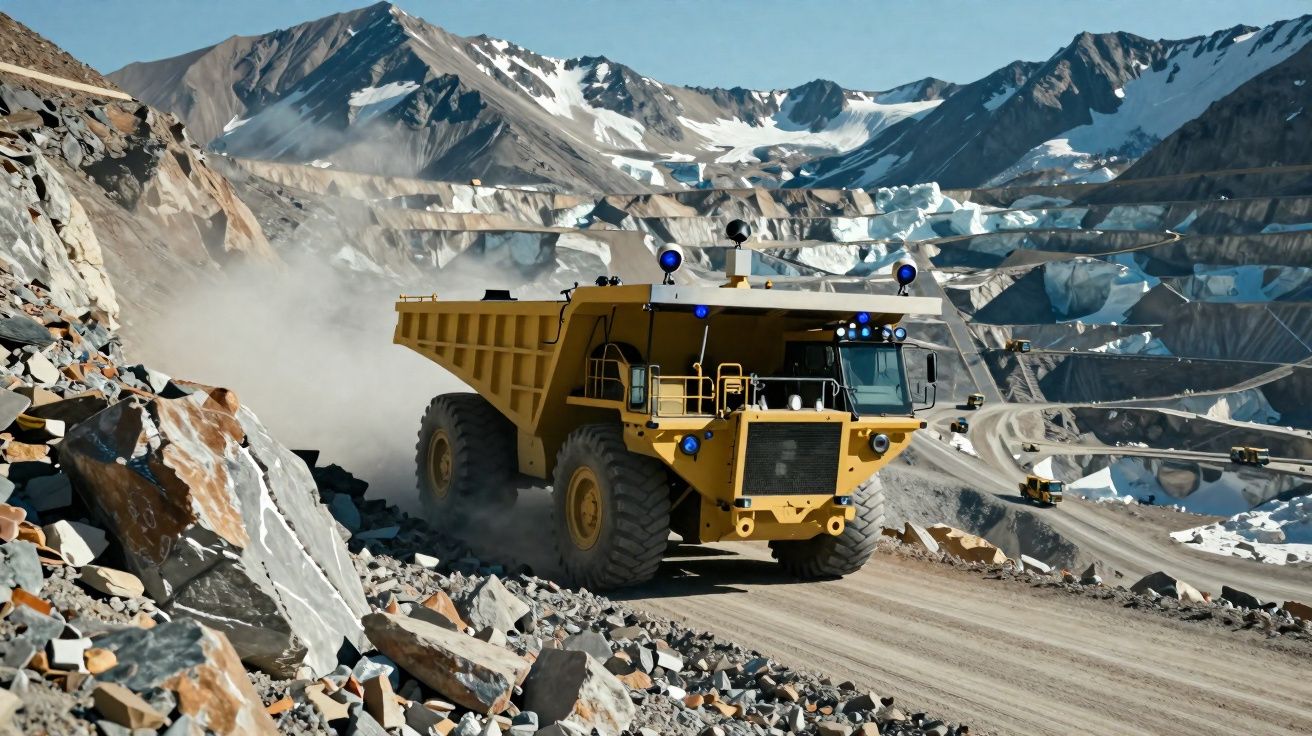
At a height where a gentle stroll can feel like a sprint, China is quietly conducting a full‑scale industrial trial.
High above the elevations most people will ever visit, a Chinese mining development is probing how far automation can be pushed when human bodies start to fail. In an environment with thin oxygen, biting winds and temperatures that plunge well below freezing, Beijing is placing a major wager on driverless heavy trucks to turn a remote mountain deposit into a profitable flow of metal.
The Huoshaoyun mine: a fortune hidden in air that makes you light‑headed
Set in the Kunlun mountains, the Huoshaoyun mine lies in the disputed Aksai Chin region of western China at roughly 5,600 metres above sea level. That puts it higher than La Rinconada in Peru, the notorious high‑altitude gold settlement often cited as one of the most punishing places on Earth to work.
Life and labour at this height are defined by physical limits. Every task demands more breathing effort, and winter conditions can be brutal: temperatures can fall to −20°C or lower, strong winds cut through layered clothing, and the ground remains frozen for much of the year. Constructing durable infrastructure is challenging, and keeping a stable, healthy workforce on site is harder still.
Beneath that hostile terrain, however, sits a large lead and zinc resource. Chinese studies put the reserve at more than 21 million tonnes of ore, with an estimated value of around €45 billion (approximately £38 billion) at current prices. Huoshaoyun is already listed among the world’s biggest lead‑zinc deposits, and surveys indicate nearby mountains may hold further, still‑untapped mineralisation.
At 5,600 metres, Huoshaoyun blends the hazards of high‑altitude mountaineering with the scale and complexity of an industrial open‑pit operation.
For many mining groups, those constraints would likely push costs and safety exposure beyond what makes commercial sense. For China, the extremity has become the rationale for an ambitious automation drive: operate the mine as far as possible with machines that do not tire, struggle for breath or suffer frostbite.
Driverless heavy trucks designed for terrain where people struggle to stand
At the heart of the project is a fleet of autonomous mining trucks, described by Chinese media as the largest driverless mining convoy currently in operation. These are not ordinary haulage vehicles with a few sensors bolted on; they are heavy‑duty mining platforms built around perception systems, computing hardware and ruggedised control stacks.
How the machines “see” through dust, snow and ice
Each truck carries a suite of cameras, radar and lidar, supported by GPS and inertial navigation to maintain precise positioning on narrow mountain routes. On‑board processors merge these inputs to produce a continuously refreshed 3D model of the terrain.
In practical terms, the trucks detect hazards, choose safe speeds and prepare for tight bends on steep, icy track. When conditions shift-such as a rockfall narrowing part of a road, or wind‑blown snow altering a corner’s usable width-the vehicles can adjust their path in real time rather than relying solely on a fixed, pre‑set route.
These machines are not merely following a pre‑programmed line; they are constantly interpreting an environment that can change from one hour to the next.
Just as important as autonomy is communication. Reports in China say the fleet is connected via 5G, using equipment supplied by Huawei. With high bandwidth and low latency, trucks can share sensor information and coordinate their movements, lowering the risk of collisions on single‑lane sections and tight passing points.
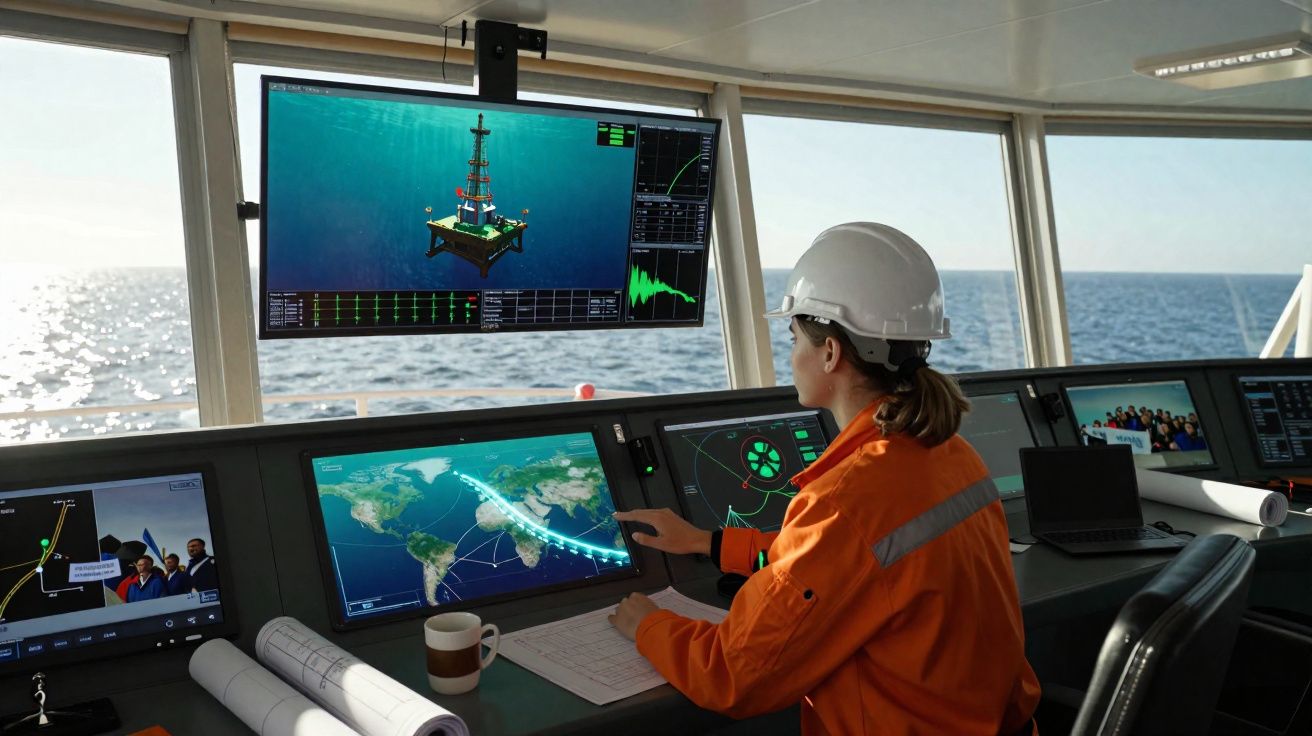
The same network links Huoshaoyun to remote control centres located hundreds of kilometres away. Operators sit at console stations resembling virtual cockpits, with wall‑to‑wall screens and selectable 360‑degree video stitched from a chosen truck’s cameras. When software reaches its limits, a human can assume control of driving or loading at the press of a button.
Why altitude turns automation into a safety requirement, not just a saving
Autonomous vehicles are often introduced to reduce labour costs and keep assets running day and night. At Huoshaoyun, the motivation is more fundamental: reducing the need for people to spend long shifts in an environment that can injure or kill.
Sustained work at 5,600 metres increases the risk of acute altitude sickness, chronic hypoxia and cold‑related harm. A conventional open‑pit mine at this elevation would require extensive medical provision, costly accommodation and frequent rotation of staff down to lower altitudes-all of which inflates the cost per tonne of ore.
By contrast, autonomous trucks allow 24‑hour haulage with a much smaller on‑site workforce. A limited team of technicians and safety personnel remains at altitude, while many drivers and supervisors can stay in greater comfort in distant cities.
- Reduced human exposure to altitude, cold and dust
- Fewer stoppages linked to fatigue, illness or severe weather
- More predictable haulage cycles and maintenance planning
- Lower insurance and safety‑driven operating costs
Early trial results cited by state‑linked Chinese sources indicate a steadier ore flow than would typically be achieved with human drivers, particularly during the long winter period when conditions are most unforgiving.
Power, maintenance and logistics at 5,600 metres (the unglamorous challenge)
One less discussed constraint of a high‑altitude mine is simple reliability. Diesel engines, hydraulics, tyres and batteries all behave differently in extreme cold, while metal fatigue and sealing issues can worsen when machines are cycled between operating heat and sub‑zero ambient temperatures. Keeping a driverless fleet productive therefore depends not only on software, but on disciplined maintenance routines and a robust supply chain for parts.
Equally, communications and positioning systems that are “good enough” at lower elevations can become mission‑critical here. Redundancy in networking, careful management of sensor icing and dust contamination, and contingency procedures for sudden weather closures all become central to whether automation delivers real uptime rather than just impressive demonstrations.
Zinc, lead and the quieter contest for industrial metals
The timing of Huoshaoyun is deliberate. Zinc and lead may not attract the headlines of lithium or cobalt, but both remain foundational to modern economies.
Zinc is widely used to galvanise steel, protecting bridges, buildings and vehicles from corrosion. It is also used in alloys and in some battery chemistries. Prices have been hovering around €2,500 per tonne (about £2,100 per tonne), with analysts expecting pressure from rising global supply and only moderate demand growth.
Lead, trading near €1,970 per tonne (roughly £1,650 per tonne), continues to underpin industrial and automotive battery markets-especially for backup power and conventional vehicles. Even as electric vehicles dominate news coverage, lead‑acid batteries still account for a large share of installed energy‑storage capacity in many applications.
| Metal | Main uses | Approximate price (Dec 2025) |
|---|---|---|
| Zinc | Galvanised steel, alloys, some batteries | €2,500 / tonne |
| Lead | Industrial and automotive batteries | €1,970 / tonne |
Locking in a large, long‑duration supply of both metals strengthens China’s position in global manufacturing chains. Many Western governments have already watched Beijing build commanding roles in rare earths, battery materials and refining capacity. Huoshaoyun suggests that extracting deposits in extreme environments could become the next competitive edge.
Towards a fully autonomous mine at Huoshaoyun
From haulage to extraction, one system at a time
For the moment, the standout milestone is the driverless truck operation. However, engineers tied to the site are openly discussing pushing automation further into extraction itself.
A logical next phase would bring excavators and drill rigs into autonomous or remote‑operated modes. Blasting, digging, loading and haulage could then proceed with minimal direct human presence at the pit face. Downstream, conveyors, crushers and sorting equipment would be orchestrated by integrated digital platforms using real‑time production and condition data.
The goal is not only self‑driving trucks, but a continuous, largely unmanned chain from the rock face to the processing plant.
Elements of this model have already been proven in less hostile settings, such as Australian iron ore operations. Huoshaoyun is a sterner test: if autonomy is dependable in thin air and deep cold, deploying similar systems at lower altitude becomes significantly easier.
A message that carries beyond one mountain
Huoshaoyun also has a political dimension. The mine sits in a strategically sensitive border zone associated with India and Tibet. Operating a high‑technology industrial site there functions as a demonstration of control and capability within a disputed area.
Beyond signalling, the technology points to wider applications. The same mix of remote operation, AI‑assisted guidance and ruggedised autonomous vehicles could translate to other harsh sites-Arctic mines, deep desert projects, and, in more speculative discussions, even future lunar regolith extraction.
Countries with mineral reserves locked behind mountains, ice or extreme weather will be watching closely. If China can make a high‑altitude mine commercially viable through automation, similar economics could bring previously marginal or too‑dangerous deposits back into play.
Benefits and risks of removing people from the pit
The most immediate advantage is safety. Taking drivers out of heavy haulage reduces accident exposure, and fewer workers on exposed slopes lowers the likelihood of fatal falls, avalanches or storm‑related incidents.
There is an environmental consideration as well. Autonomous fleets can be programmed to avoid harsh acceleration, keep consistent speeds and minimise idling. Over years of continuous operation, that can reduce diesel use and emissions per tonne moved-though the mine’s overall footprint remains substantial.
The trade‑offs are equally real. Automation reshapes the labour market: communities that might have expected driving or equipment‑handling jobs may instead see demand shift towards software engineering, data analysis and specialist maintenance-roles often based far from the site.
Technical vulnerabilities also matter. Heavy reliance on 5G links and remote operations raises questions around cyber‑security and resilience. A prolonged network outage during severe weather could stop production. Likewise, flawed sensor inputs or navigation software errors could trigger collisions or equipment damage in a location where recovery and repairs are slow and expensive.
What “autonomous” actually means in a mine like this
For anyone thinking of self‑driving taxis or delivery robots, mining autonomy is a different category. The operating area is private, controlled and geofenced, and traffic is relatively predictable-mostly trucks, loaders and support vehicles on defined routes.
That makes it an ideal proving ground for advanced robotics, but autonomy is rarely absolute. In practice, engineers describe “levels” of automation: machines handle most decisions while humans remain available to intervene.
At Huoshaoyun, “autonomous” appears to mean:
- Trucks conduct routine haulage under software control
- Remote operators oversee multiple vehicles simultaneously
- Direct human driving is reserved for complex or emergency scenarios
This hybrid approach reflects a broader industrial pattern: human judgement is not removed, but relocated-spread across more machines from safer, more comfortable control rooms.
Ultimately, this frozen, high Chinese mountain is not only about getting ore down from thin air. It is a live test of how far heavy industry can advance when the human body becomes the key constraint-and what new constraints large‑scale automation introduces in its place.

Comments
No comments yet. Be the first to comment!
Leave a Comment