
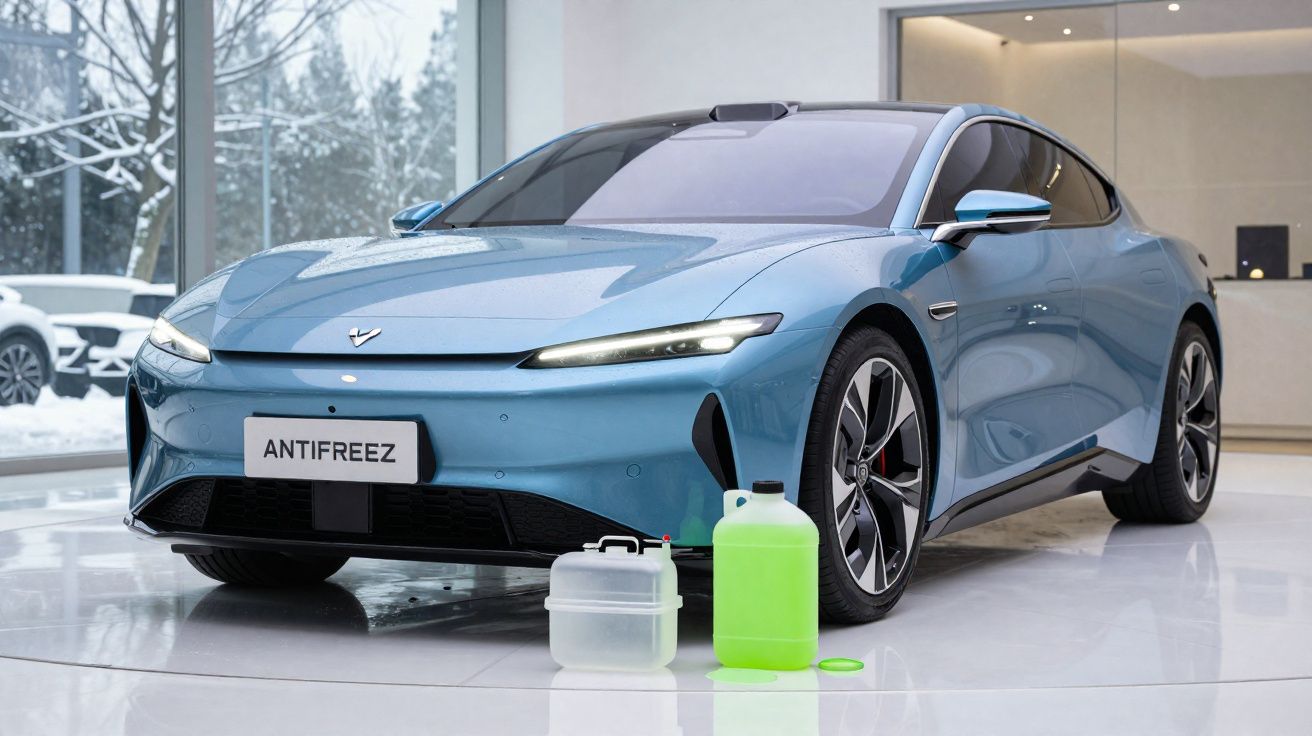
Many drivers think about winter tyres, an ice scraper and door seals, yet the cooling system is often ignored. That’s exactly where a hidden winter risk sits-missing or tired antifreeze in the coolant. It may sound like a minor detail, but in freezing weather it can be the difference between an engine that survives and an engine that becomes an uneconomical write-off.
Antifreeze in the coolant: an unremarkable fluid with expensive consequences
In the expansion tank, antifreeze often looks like nothing more than a brightly coloured liquid. In reality it’s a carefully engineered mixture-typically ethylene glycol or propylene glycol combined with water and additive packages.
This blend has three key jobs:
- Lower the freezing point of the coolant to well below 0 °C.
- Raise the boiling point so the system doesn’t boil over in summer heat.
- Protect the cooling system internally against corrosion and deposits.
Without antifreeze, the water in the engine block can freeze, expand and crack components-from the radiator and water pump right through to the cylinder head.
Coolant also lubricates moving parts such as the water pump. Its additives form a protective film on metal surfaces and slow corrosion. As the coolant ages-or if it’s repeatedly topped up with plain water-this protection is gradually lost.
What freezing temperatures can really destroy in a car
When temperatures drop well below zero and there’s too little (or no) antifreeze in the system, the water content starts to freeze. Water expands as it turns to ice-and that expansion is what causes damage.
Risk to the engine block and cylinder head
Frozen coolant can generate extreme internal pressure. That pressure tends to release at the weakest points, including:
- hairline cracks or fractures in the engine block
- cracks in the cylinder head
- leaking freeze plugs (also known as core plugs)
A cracked engine block is usually not cost-effective to repair. Particularly on older cars, garages will often class it as an uneconomical write-off.
Radiator, hoses and water pump: the next victims
Ice in the cooling circuit can also:
- split the radiator
- tear or burst coolant hoses
- jam or destroy the water pump
Burst hoses or a damaged radiator are frequently only noticed on the next drive-when the engine suddenly overheats and steam rises from the engine bay.
Skipping a winter check that might cost around £45 can later lead to four-figure repair bills.
When your engine is asking for help: take warning signs seriously
Cooling and antifreeze issues rarely arrive with no clues at all. Common warning signs include:
- The temperature gauge rises unusually fast or moves into the red.
- A coolant warning light appears on the dashboard.
- Coloured puddles under the car-often green, yellow, pink or blue.
- A sweet smell in or around the car, especially after a drive.
- Steam or “smoke” from the engine bay.
If any of these occur, avoid driving on and arrange recovery or a garage visit. Continuing with low coolant risks overheating damage-even in winter.
How drivers can check antifreeze in the coolant themselves
A quick look under the bonnet is often enough to rule out the biggest risk. Many people feel unsure about doing this, but the basics are straightforward.
Step-by-step check (bonnet up)
- Let the engine cool completely-wait at least 30–60 minutes after driving.
- Open the bonnet and locate the coolant expansion tank (usually translucent, often marked with a thermometer symbol).
- Check the level is between MIN and MAX.
- Look at the coolant’s condition: dark brown colouring or cloudiness can indicate contamination or corrosion.
- If you’re unsure, ask a garage or filling station to measure the freeze protection level.
Never open the coolant cap while the engine is hot-there’s a serious scalding risk from pressure and hot vapour.
Which antifreeze belongs in which car?
Modern engines can react badly if the wrong coolant is used. The days when “any coloured fluid” would do are long gone.
Three simple rules prevent expensive mistakes:
- Follow the manufacturer specification: the owner’s handbook or service book lists the required coolant standard.
- Don’t mix types at random: different formulations can react and form sludge inside the system.
- Dilute only with distilled water: tap water introduces limescale and minerals that can clog passages.
Many garages now use testers that display freeze protection in degrees-commonly down to –25 °C or –35 °C. For typical UK winters, protection around –25 °C is usually adequate; in colder upland areas, higher protection can be sensible.
Change intervals: antifreeze isn’t “fill it and forget it”
Even if the level looks fine, coolant can lose its protective properties over time because anti-corrosion and anti-deposit additives degrade.
As a broad guide:
- change every 2 to 4 years, or
- after 40,000 to 60,000 km
- some long-life coolants last a bit longer-check the service book for your vehicle.
If you’ve bought a used car and don’t know the maintenance history, it’s often wise to replace the coolant completely once. The cost is modest compared with the price of a radiator, water pump or major engine work.
Common myths that become expensive in winter
A few persistent misunderstandings around antifreeze in the coolant can directly contribute to damage:
- “I only top up with water-it’s cheaper.” Each top-up dilutes the antifreeze and reduces freeze protection. After several top-ups, the system can end up almost like plain water.
- “My car’s in a garage, so it’ll be fine.” Many garages are unheated; during cold spells temperatures can still drop well below 0 °C.
- “I only drive short trips-that’ll be alright.” Short-journey drivers often notice problems later because the engine doesn’t reach full operating temperature and warning signs can be less obvious.
More than frost protection: cooling, corrosion control and engine life
Although antifreeze is associated with winter, coolant supports the engine all year. In hot weather it helps prevent boiling; in cold weather it prevents freezing. At the same time, it reduces rust and scale inside narrow channels in the engine and the heater matrix.
If those channels start to clog, the cabin heater can become weak and the engine may cool unevenly. Over time that can contribute to cylinder-head distortion, head-gasket leaks and oil-and-water mixing-classic, costly engine failure.
Paying attention to coolant and antifreeze often extends engine life by years-for only a few pounds per year.
Extra points many drivers overlook: safe handling and correct refilling
Antifreeze is harmful if swallowed and can be attractive to pets because of its sweet taste. Clean up spills promptly, store containers securely and take old coolant to a proper recycling facility-never pour it down drains.
If you do need to top up, prefer the correct pre-mixed coolant or the right concentrate mixed to the manufacturer’s ratio using distilled water. After any significant refill, the cooling system may need to be bled to remove air pockets; trapped air can cause overheating even when the expansion tank level looks normal.
A practical winter routine for drivers
A simple routine keeps the risk manageable:
- Check freeze protection once in autumn (or at least verify the coolant level yourself).
- At every oil service, ask for the coolant condition and freeze protection to be checked.
- Treat colour changes or rust-like particles in the tank as a warning sign.
- Don’t ignore warning lights or a rising temperature gauge-act immediately.
Especially on older vehicles, reliability often depends on how well owners look after “invisible” systems. Tyres, brakes and bodywork are easy to notice; the cooling circuit stays out of sight-right up until it fails.
If you’re not confident, it’s better to visit a garage or test station once too often than once too late. The check typically takes only minutes, costs little, and can save an engine from a brutal cold-weather shock.





Comments
No comments yet. Be the first to comment!
Leave a Comment